A career pivot isn't a reinvention. It's a re-read.
You've spent years in the same role. You're good at it. You've done well.
Yet, sometimes you feel bored or antsy. A nagging voice pipes up: What else is out there? Would I be any good at it?
You look at open roles within your company, you look at what else is on offer on LinkedIn. It doesn't take long to see that you don't tick a lot of the "job requirements." Filled with doubt, you decide to stay in your lane.
At BeamMe, we believe there is another way.
Your CV knows what you've done. Your evidence knows how you work.
Here's an example. Al is invented — but the moments he logs are the kind members log every day. He's spent 20 years in Ops, and he's logged more than 20 experiences in BeamMe™.
Some are directly related to his job: he stabilized quarterly planning across three platform teams, prevented a cross-team roadmap collision, and found recurring problems that turned out to be ownership problems.
Others are things we barely notice, like the call when a vendor's golden retriever wandered into view carrying a couch cushion, and Al asked him to introduce "your colleague." For five minutes, everyone talked about their pets, loosening what had been a very stiff call. Shortly afterward, the vendor admitted to a constraint that hadn't been disclosed earlier and would have a downstream impact.
Another day, eight colleagues wasted so much time debating where to go for lunch that Al opened a blank document with two columns (TACOS or THAI). He then called for a 30-second vote. Moving forward, picking lunch became a game, and different teammates took turns opening the doc.
Al logged each of those moments because something he chose to do changed an outcome or a process.
Over time, BeamMe would notice the pattern across Al's seemingly unrelated experiences: he notices what's keeping people stuck and changes the conditions so they can move. Sometimes he reframes the question. Sometimes he introduces structure. Sometimes he breaks the formality that prevents someone from saying what they really mean. He does it almost instinctively, often before anyone has asked him to.
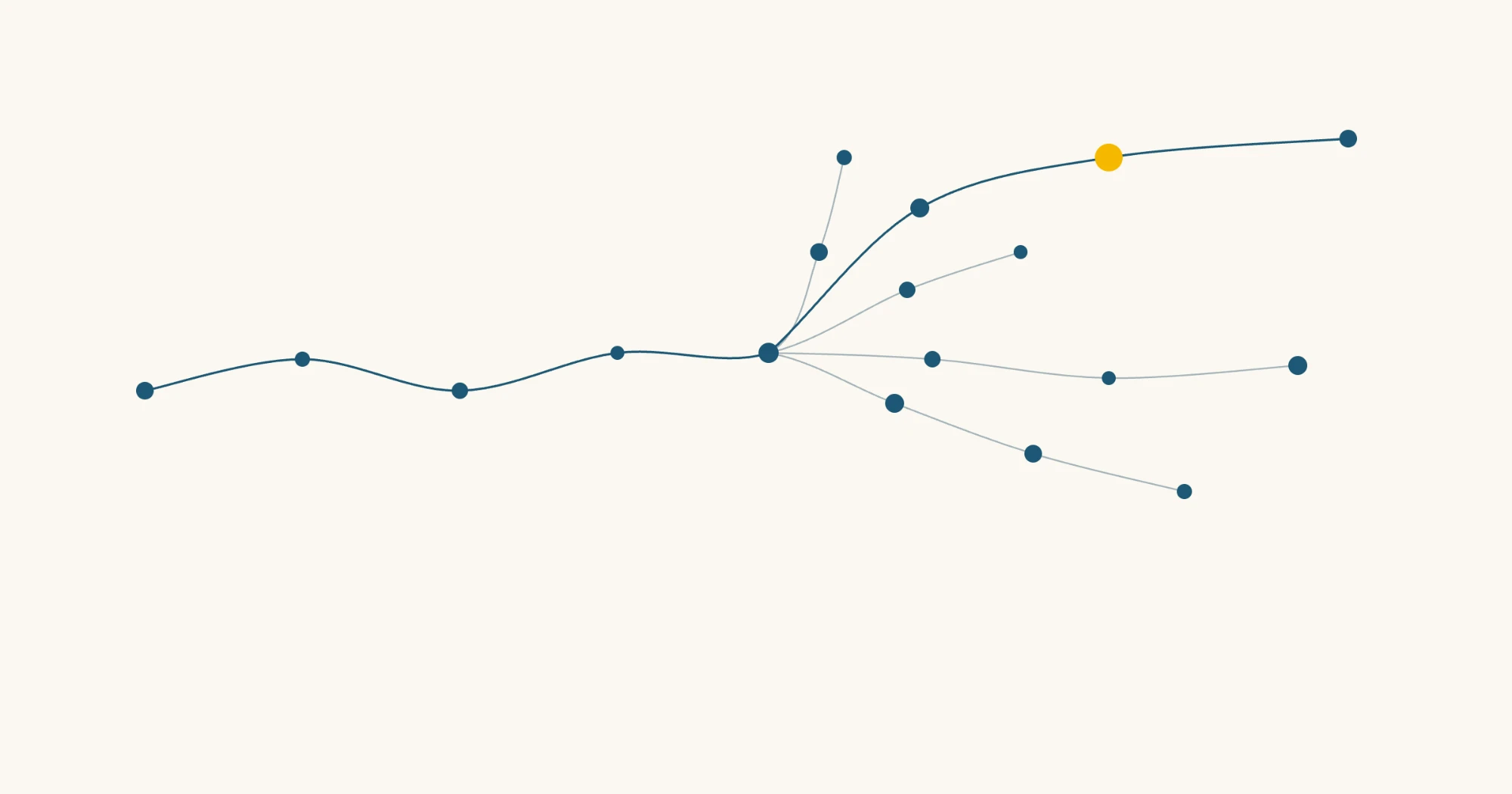
A pattern separates you from your job title
Once BeamMe knows a user's pattern — their Work Signature — something shifts: you are now able to start with yourself, instead of with the job description written by someone else.
You can ask: Where else could the way I create value be useful?
You can read the job description before the requirements list and ask: what problem is this organization trying to solve? And instead of ticking through a list, you consider if your how, along with your skills, could be a fit.
BeamMe's Opportunity Fit will help you assess, against your own evidence, what bet that company would be making if it hired you.
If the gap is too large, as it sometimes will be, BeamMe will tell you. Whether you choose to close it is up to you.
How AI changes the game
I built BeamMe without knowing how to code. AI made that possible. But the more interesting discovery came when BeamMe read my own work back to me.
My Work Signature™ — "I build and write at the interface between two audiences who don't yet share a language, using the artifact — the post, the manual, the product — to make one legible to the other."
Building BeamMe has been another expression of that same pattern. This time, I'm trying to build a bridge between the value professionals have built over decades of work and a future workplace that's changing how that value is recognized.
I didn't have to reinvent myself to build something entirely new. I brought the way I've always worked to a problem I couldn't have tackled before AI.
That's what a pivot can look like.
Frequently asked questions
How do I know if I'm ready for a career pivot?
It's a very personal decision. One place to start is to look at the work you've already done. What kinds of problems do you repeatedly solve? What do people rely on you for? What comes naturally to you that others find difficult? Your answers may point toward opportunities you haven't considered.
How can BeamMe help me identify transferable skills?
BeamMe goes beyond identifying skills. As you log experiences, it looks for recurring patterns in how you notice problems, make decisions, work with others, and change outcomes. Over time, those patterns inform your Work Signature: an evidence-based understanding of how you create value, regardless of your job title.
Can BeamMe tell me whether I'm qualified for a different role?
BeamMe's Opportunity Fit compares a role's demands with the evidence you've logged. It helps you distinguish between experience you can demonstrate, capabilities you may have developed in another context, and genuine gaps. It won't invent qualifications you don't have or promise that you'll get the job.
How can AI help me change careers without going back to school?
AI can help you learn unfamiliar concepts, analyze information, build prototypes, and perform tasks that previously required specialized technical skills. It doesn't eliminate the need for expertise, experience, or professional qualifications. The question is which gaps AI can realistically help you close — and which require deeper training.
Do I need to reinvent myself to make a successful career pivot?
Not necessarily. Your next direction may be an extension of how you've always worked, applied to a different problem or environment. The challenge is recognizing what remains valuable when you take away your current job title. BeamMe helps you find that recurring pattern in your own evidence, so you can explore what's next without inventing a new version of yourself.